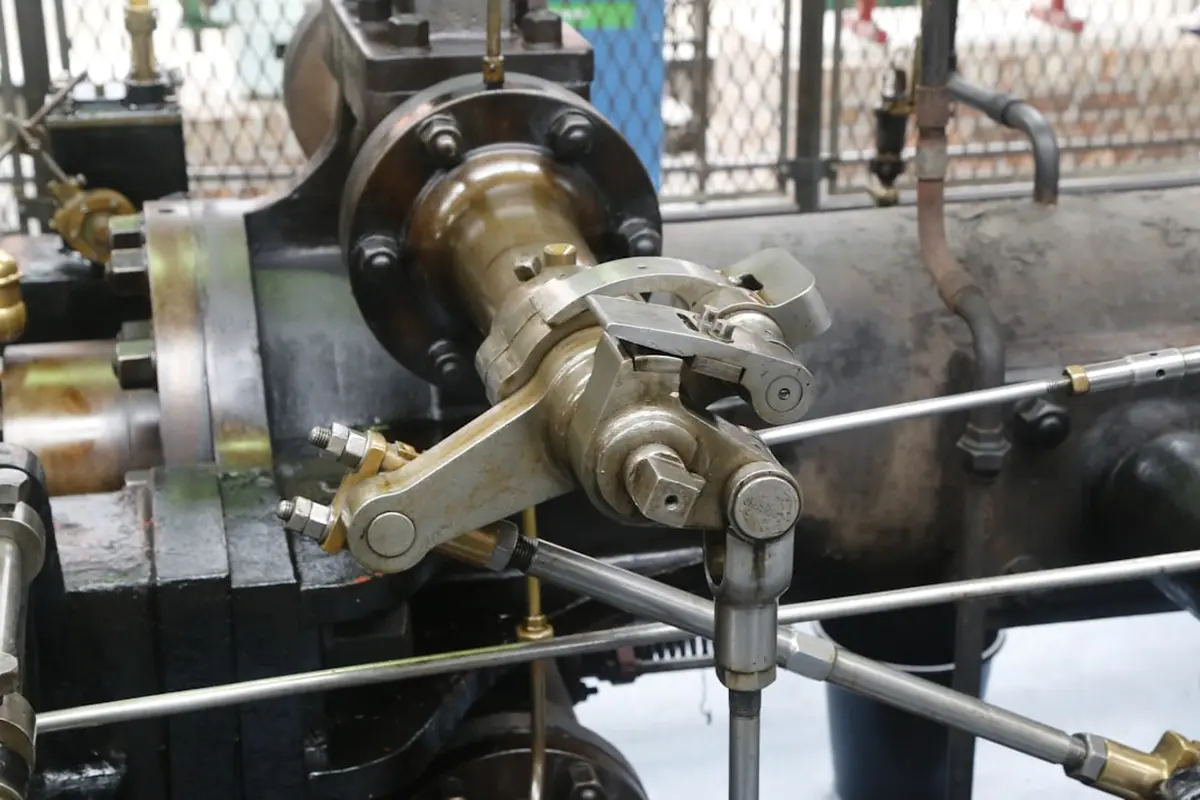
Five workholding techniques that get past the basic vise and chuck setup, with the figures behind each. They run from the jaw downward. The first three grip the part directly. The fourth is the fixture body under them. The last is the base layer that bolts everything to the table. The dovetail comes first because it is the one people search for and the one with the most numbers attached.
Dovetail fixtures for five-axis work
You machine a small angled flange into the bottom of the blank, and the fixture clamps on that flange instead of on the part's sides. The 5th Axis product page describes a 45 degree dovetail in 4100-series steel, with dovetail depths of 0.100 to 0.205 in across eight catalog models. The wedge pushes inward and downward at once, so the part cannot lift. RivCut puts the sacrificed ridge at 0.040 to 0.060 in tall and a fixture at $200 to $800 as of 2026. Those two sources measure different dimensions, so do not compare them directly.
The cost is prep work. Per CTE, the blank needs opposing dovetail grooves and positioning holes before it goes in. Kurt's DT20, hardened 4140 with a fixed positioning pin, is built around that prep. JLCCNC gives setup at 15 to 45 minutes against 2 to 5 for a vise, and repositioning under 0.01 mm against 0.01 to 0.05 mm for a vise. That is a blog figure taken "in controlled setups," and nobody has published the test conditions. Leave 5 to 8 mm of stock near the feature in steel and 3 to 5 mm in aluminum.
Use it when the part needs all five sides reachable in one five-axis setup, and when the cuts are heavy.
For those shops taking heavy cuts, dovetails are the clear choice. The part absolutely cannot lift up.
Vises that indent the stock first
This works like a dovetail without the dovetail cutter. EMUGE-FRANKEN USA's EvoGrip, introduced in 2025, clamps hard enough to dent the blank right on the mill. The jaw protrusions then seat in those dents, so a small contact area holds far more than flat jaws would. CTE's account lists nine vise variants, base plates with zero-position indexing, and riser blocks for clearance. Mate's DynoGrip Air, shown at IMTS 2026, uses pentahedral-tooth jaws and an anti-lift design for the same purpose.
The holding-force gain is the vendor's claim. Neither source gives a pull-out figure. To check it, clamp your own material, at your own grip depth, under a cut you would actually run. Like the dovetail, the dented band has to be stock you can afford to lose.
Vacuum, magnets and soft jaws for thin or awkward parts
A vise squeezes thin plate out of flat. The CTE fundamentals piece recommends vacuum chucks for thin-walled parts that need even holding force, magnetic holding for ferrous thin-walled parts, and aluminum or plastic soft jaws for irregular contours. RivCut puts vacuum at about 14 psi at full vacuum. Do the arithmetic before a heavy cut. A 10 x 10 in plate has 100 sq in of area, so even a perfect seal holds it with no more than about 1,400 lb.
Vacuum will not hold porous materials such as cast iron or certain plastics. For ferrous work, Industrial Magnetics began carrying Flaig FXL electromagnetic chucks in North America this year. For delicate round parts, HWR's INOZet pendulum bridges double the jaw count on chucks of 200 mm and up.
Modular fixturing, built off the machine
Modular fixturing means subplates, tombstones, angle plates, locators and clamps that you reconfigure from job to job. CTE's pros-and-cons piece quotes Carr Lane's Aaron Hull: "You can put a fixture together in a day and start cutting." The cost spreads across many part numbers instead of one job.
The technique is to assemble the next fixture at a bench while the spindle runs the current job. Bluco's Brian Dodsworth puts it this way: "When those doors are open, you're not making chips." The same logic applies to multi-face tombstones. Raptor's Darin Wion describes the common failure as a single-station vise on a machine that could run several parts at once.
The trap is standards. Vendors use 50 mm spacing with M12 threads, or 2 in centers with 1/2-13, or a 1.25 in grid. Vise hole spacing can vary even within one brand. Budget for adapter plates and keep a CAD library from the first purchase.
Zero-point bases
A zero-point base is not a clamp. As Nextastech puts it, the dovetail or vise touches the part, and the zero-point base sits underneath and locates the removable tooling. Locator pins plus hydraulic or pneumatic clamps mean every fixture returns to the same reference, so you skip indicating. Vendors named in the IMTS 2026 preview include SMW-Autoblok, Erowa and LANG. Schunk's VERO-S is described as needing one zeroing step, with repeatability "measured in microns." HWR markets its SOLIDBolt as fitting existing tables on all major machine brands. That is a marketing claim, so check it against your table's bolt pattern.
Treat the published figures with care. CTE prints zero-point repeatability as "within 0.2 inches," which would be useless and is presumably a misprint. Neither source gives a verifiable micron number. The base also adds height, mass and joints to the stack. On a five-axis machine, that height costs you reach.
Start where the spindle is idle. If setups keep the doors open, building modular fixtures off the machine costs the least and needs no new hardware standard. If a five-axis machine is holding parts in a 6 in vise, which CTE calls unsuitable, start with the dovetail. RivCut puts custom-fixture breakeven at 20 to 50 parts, so run the job count first. Mate's Austin Heisick adds a cost that rarely makes the budget: a fixture that chatters wears out solid carbide end mills early, and carbide prices have risen.
Comments
No comments yet. Be the first to comment!
Leave a Comment